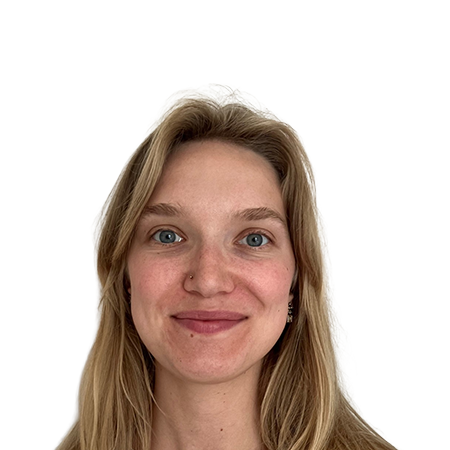
In our latest next generation blog, resident doctor Dr Ellen Thompson reflects on spending 6 months training in Iceland, what another healthcare system taught her about being a physician and why resident doctors should feel able to step outside the conventional training pathway.
A few months ago, if you had told me that part of my internal medicine training (IMT) would involve working in Iceland, learning enough Icelandic to communicate with patients and running a half marathon under the midnight sun, I am not sure I would have believed you.
I had always been interested in working elsewhere in Europe and in learning languages, so when I heard that one of our London training programme directors was looking for someone to test an exchange with Iceland, I was immediately interested. It turned out to make more sense educationally than you might think. Iceland follows the UK IMT curriculum, doctors take MRCP(UK) examinations and use the NHS ePortfolio. In theory, much of my training could therefore be transferable. The opportunity still felt like a leap into the unknown. But I decided to take it.
Learning to ask ‘why?’
I spent 5 months working primarily in acute and general medicine and another month in respiratory medicine. There were differences from the NHS, but there was also plenty that felt familiar. Some of the pressures certainly were. Corridor care was common in the emergency department and acute beds could be occupied by patients who were medically fit but waiting for onward care.
Other aspects of working life felt very different. General medicine still operated with a traditional team structure. Resident doctors generally stayed with the same team for at least 2 weeks, while patients tended to remain under that team throughout their admission. I felt that the resulting continuity benefited both doctors and patients.
But one of the biggest differences was less about structures and more about how people thought about medicine. I spent time working with Elias, one of the first physicians in Iceland to specialise purely in internal medicine. One day, after I prescribed prophylactic enoxaparin for a patient, he asked me to explain the evidence behind my decision. I knew the UK risk assessment tools. But when challenged to explain the evidence itself, I realised that I could not give a particularly convincing answer. That conversation has stayed with me.
I found that the team in Iceland often placed more emphasis on understanding the evidence and discussing it together rather than simply reaching for a guideline. It sent me back to some of the fundamentals of acute medicine, from hyponatraemia to hyperosmolar hyperglycaemic state, and reminded me how easy it can be to know the recommended next step without stopping to interrogate why it is the right one. I came back to the UK wanting to understand the ‘why’ more deeply and to draw on a wider range of international evidence and resources.
Making space to learn
The culture around teaching was another important difference. The hierarchy felt relatively flat and discussion was encouraged. Each morning after handover, a consultant or resident doctor would present a short case. It often prompted a wider conversation and some useful learning. It was a simple thing, but it made teaching part of the working day rather than something squeezed in when everything else had been done.
Consultants were highly visible and involved in day-to-day clinical work. On a busy on-call shift, you might even find a consultant clerking patients alongside the rest of the team. Asking questions and discussing decisions felt normal, which created a supportive environment in which to learn.
And then there was lunch. Every day at 12pm, the internal medicine department, including consultants, resident doctors and medical students, would go to the canteen and eat together. Trying to work through lunch would have been seen as rather strange. Even during on-call shifts, sitting down to eat was treated as part of the working day.
It sounds like a small thing, but it mattered. It gave people time to talk and get to know one another outside the immediate pressure of clinical work. As somebody who had arrived in a new country and a new healthcare system, I particularly appreciated that sense of belonging.
Of course, I know that the NHS operates under different pressures. But the experience made me think differently about what we choose to protect. Teaching, breaks and time together as a team can easily become optional extras. They shouldn't be. They contribute to learning, morale and ultimately to how it feels to come to work.
Systems that let doctors be doctors
There were practical lessons too. I was struck by how clearly roles were defined on the wards. Nurses played an active role in patient management and ward rounds, and there were clearer boundaries around tasks such as cannulation and taking blood. That meant medical work felt more focused on clinical assessment, diagnosis and decision-making rather than some of the administrative and organisational work which can consume doctors' time.
Technology helped. A centralised electronic record meant that we could access patient records and GP correspondence from across the country. A closed-loop messaging system made it straightforward to contact the nurse or doctor looking after an individual patient without relying on bleeps or work phones. Specialty referrals and phlebotomy requests were also electronic, and there were four phlebotomy rounds each day. Individually, these things can sound mundane. Taken together, they made the working day feel easier and created time to concentrate on being a doctor.
Finding confidence by stepping outside the familiar
Getting to Iceland wasn't entirely straightforward. Obtaining a medical licence involved tracking down documents about my medical degree and exam results, posting paperwork to Reykjavik and navigating questions around indemnity. The language was another challenge. I took a basic Icelandic course before leaving, which proved worthwhile. While many people speak excellent English, that was not always the case in a clinical setting, particularly among some older patients.
But perhaps because it wasn't always easy, the experience gave me more confidence than I expected. Working in another system showed me that the training I had received in the NHS was transferable. It can sometimes feel as though we are trained to operate within one system. Working abroad made me realise that the underlying clinical skills travel with you.
It also taught me something about embracing uncertainty. Before going, I worried about what stepping away from the usual training pathway might mean for my career. There were plenty of unknowns. In the end, it reminded me that our careers can contain more possibilities than we sometimes allow ourselves to imagine. After Brexit, I had more or less written off the idea of working elsewhere in Europe because I assumed it would be too difficult. There were certainly hurdles, but doing it showed me that it is possible.
Why more resident doctors should look beyond the conventional pathway
Working abroad during training is commonplace for doctors in many countries. I think UK resident doctors could gain a huge amount from having similar opportunities. Moving into another healthcare system challenges you to look again at things you have started to take for granted. You see different ways of organising teams, delivering care and approaching clinical decisions. Some things make you think about what could work differently at home. Others give you a renewed appreciation for what the NHS does well. I would love to see out of programme experiences become a more familiar part of medical training rather than something that feels unusual or difficult to pursue.
My advice to anyone considering one is simple: go for it.
Be prepared to be patient and persistent. Learn some of the language. Don't put pressure on yourself to master a new healthcare system, make friends, learn a language and explore an entire country in your first few weeks, as I briefly tried to do. Most importantly, don't be afraid of taking a route that looks different from the one that you expected.
I came back from Iceland more confident in my clinical skills, more curious about the evidence behind the decisions I make and more open to where a career in medicine might take me. I also came back convinced of one other thing: wherever you are working, make time to have lunch with your team.
Dr Ellen Thompson
Resident doctor