


























Scheduled maintenance
From 10 – 17 April we will be performing essential maintenance on our website. During this time, services such as login, event booking and updating membership details will be unavailable.

For the NHS to reach net zero by 2040, there will need to be significant changes to the way healthcare is delivered. Reaching net zero is critical to reduce the effects of climate change that negatively affect health and contribute to excess deaths.
Working across acute, outpatient and community settings, physicians are uniquely placed to lead the change and adopt more sustainable healthcare in their practice. In an RCP survey conducted in June, 61% of doctors said they are already considering the environmental impact of clinical decisions. Respondents highlighted several barriers for implementing sustainable healthcare, including a lack of time, lack of organisational support and gaps in training and awareness.
The RCP will continue to advocate for doctors to have the time, resources and training to deliver greener clinical care. But there are actions all physicians can take to help slow the pace of climate change and support patients to adapt to its effects. Making changes to your clinical practice – whether large or small – not only helps reduce the NHS’s carbon emissions but can improve patient care.
Green physician toolkit actions
The RCP encourages physicians to explore practical steps that make healthcare more sustainable. Physicians should use their judgement to apply actions suggested only when clinically appropriate and supported by available technology.
Medicines and prescribing account for 17% of the NHS carbon footprint in England. Every prescription and patient interaction is an opportunity to reduce the environmental impact of medicines. Physicians can:
- prescribe lower carbon medicines
- optimise medicines.

Patient, visitor and staff travel produces 11% of emissions in the NHS in England. Using telehealth when clinically appropriate can reduce unnecessary travel and cut carbon, while maintaining high-quality care that is convenient for patients. Physicians can:
- offer remote consultations
- remotely monitor clinical data.

Many NHS appointments, tests and treatments bring little or no clinical benefit to patients. Each interaction with patients must add value – streamlining care can improve patient outcomes, avoid unnecessary travel, and reduce the NHS carbon footprint. Physicians can:
- offer same day care and procedures
- participate in multispecialty and multidisciplinary clinics
- provide specialist advice about patient care
- support patient-initiated follow-up.

Poor health carries a significant human and economic toll, costing the NHS £12 billion a year due to obesity and excess weight, and £27 billion from the health effects of air pollution. This has significant environmental impacts, making prevention integral to sustainable clinical care. Physicians can:
- help people to live well
- suggest non-pharmacological interventions to counter the social and commercial determinants of health.

Optimising the use of diagnostics in the NHS is an important element of sustainable healthcare. Several studies (1, 2, 3) suggest that some investigations may not be clinically necessary. Physicians can:
- reduce unnecessary investigations.

High temperatures, flooding, air pollution and extreme weather events will become more common due to climate change. It is a physician’s responsibility to support their patients to protect themselves from the health impacts of these changes. Physicians can:
- adapt care plans to take account of changing environmental factors
- undertake medication reviews ahead of heatwaves
- provide information to patients about protecting their health.

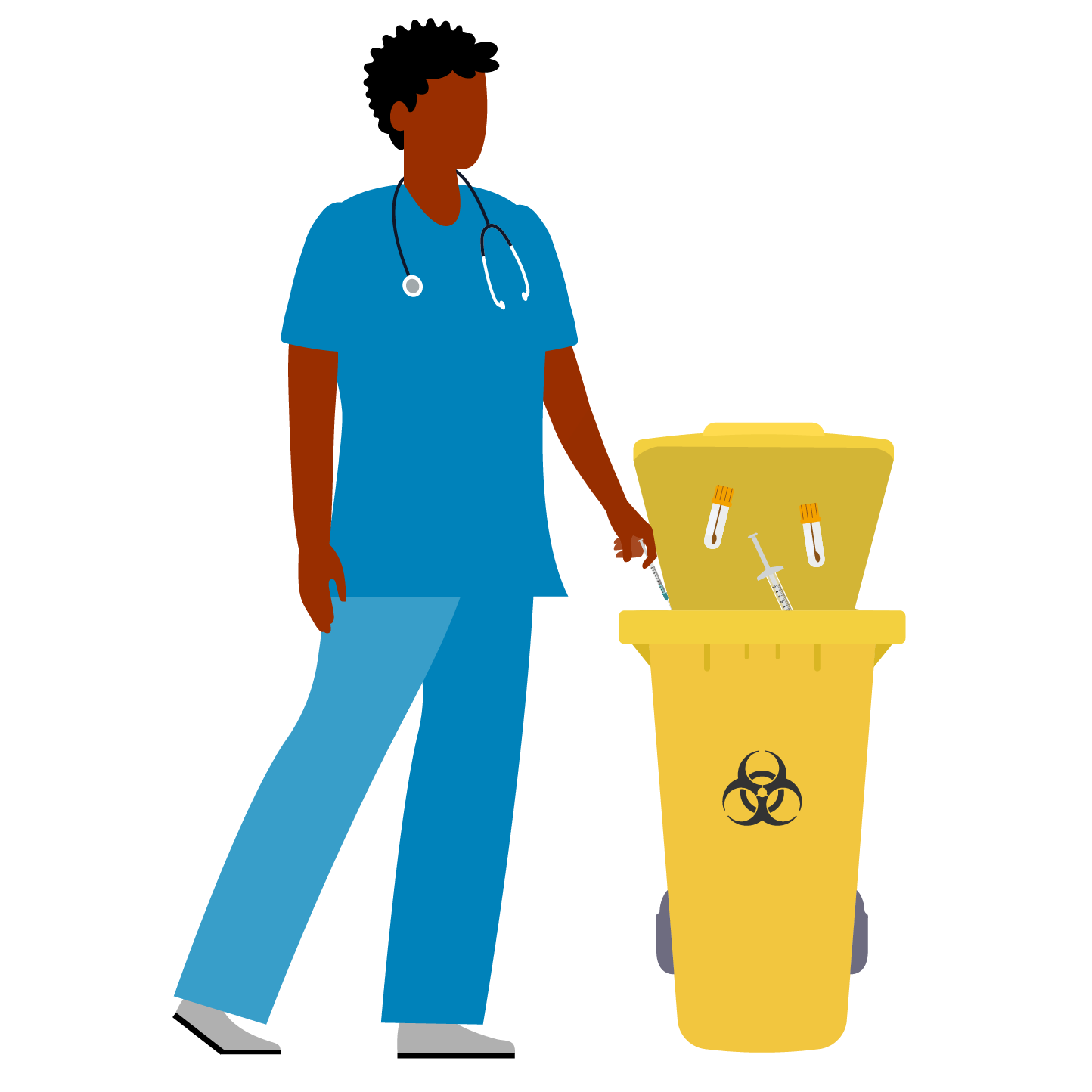
Waste, water and refrigerants account for 1% of NHS England’s emissions. Globally, 99% of clinical and laboratory plastic waste ends up in landfills or is incinerated. Tackling waste is essential – not only to achieve net zero targets but to cut costs, boost resource efficiency and enhance patient care. Physicians can:
- reduce single-use products
- ensure compliance with waste segregation
- limit paper usage
- recycle where possible.
As senior clinical leaders, physicians are uniquely placed to drive the shift toward more sustainable healthcare. Across the NHS, small behavioural changes have already improved outcomes and efficiency, reducing costs and emissions. Scaling these actions – no matter how big or small – can drive system-wide change. Physicians can:
- advocate for sustainable clinical practice
- become a green champion or clinical sustainability lead
- teach and educate others
- embed sustainability into quality improvement.

Implementing sustainable healthcare
You can explore the RCP’s guidance for delivering the Green Physician Toolkit actions below.
Prescribe low carbon medicines
- Prescribe dry powder inhalers (DPIs) as an alternative to metered-dose inhalers (MDIs).
- Prescribe reusable cartridge insulin pens.
- Prioritise prescribing oral medications – reserve IV medications only where oral is unavailable or not appropriate, and review IV antibiotics for oral switch using national criteria.
- Identify and safely remove incorrect penicillin allergy labels after clinical assessment.
- Advocate for electronic prescribing systems in your organisation to display lower-carbon medicines first.
Optimise medicines
- Undertake structured medication reviews, deprescribing where medications are causing harm or are no longer of benefit to the patient, using validated tools such as the STOPP/START criteria and the BGS Pragmatic Prescribing guidance.
- Check medication adherence in every contact with patients.
- Enable shared decision-making through open communication with patients about their medicines.
- Follow the RCP’s acute care toolkit for managing multiple medications.
Offer remote consultations
- When technology for remote consultations is available, assess patients for suitability.
- Work with patients to determine the appropriate format (video, telephone, secure messaging, or face-to-face).
Remotely monitor clinical data
- Recommend remote monitoring to suitable patients during consultation, such as those who live rurally or where local services can support.
- Review patient data and act on abnormal changes.
- Ensure remote monitoring adds benefit to patient care, and that kits are low waste.
Offer same day care and procedures
- Identify patients with urgent clinical needs.
- Arrange immediate investigations, treatments or minor interventions if a same-day clinical slot is available.
Participate in multispecialty and multidisciplinary clinics
- Identify opportunities to participate in these clinics.
- Coordinate schedules with other specialists to offer joint patient assessments.
Help people to live well
- Talk to patients about eating healthy food, reduced alcohol consumption, regular exercise, quitting smoking, and addressing housing issues (eg dampness) to support overall health.
- Give patients concrete actions and signpost them to appropriate services (eg stop smoking services) to support them with following advice.
- Speak to and educate patients about the health effects of air pollution, including how to avoid it or reduce its impacts.
- Consider the wider determinants of health in your conversations with patients, as set out in the RCP’s Bridging the gap guidance.
Suggest non-pharmacological interventions to counter the adverse social and commercial determinants of health
- Recommend social and green prescribing, as well as nature exposure, if available in your area.
Reduce unnecessary investigations, such as tests and procedures that do not benefit patients clinically
- Utilise the Royal College of Radiologists’ i-Refer guidelines to determine the most appropriate imaging investigations.
- Follow the Royal College of Pathologists’ minimal retesting intervals guidance.
- For patients with advanced illness or nearing end of life, prioritise investigations that positively impact care management and align with their overarching care goals.
- Before ordering investigations, carefully consider their clinical necessity, check if they have been done recently, and consolidate tests where possible to avoid duplication.
- Support shared decision making by talking with patients about when investigations are not clinically necessary.
Adapt care plans to take account of changing environmental factors
- When creating or reviewing care plans, consider incorporating advice about the patient’s risk to environmental factors, such as hot weather or air pollution spikes.
Undertake medication review ahead of heatwaves
- Sign up to the UKHSA heat health alerts and become aware of when heatwaves are expected.
- Identify patients at risk from heat-sensitive or dehydration-prone edications, utilising Society of Acute Medicine’s guidance.
- Adjust doses or switch drugs where appropriate to reduce heat-related risks.
Provide information to patients about protecting their health in changing environments
- Give clear, condition-specific advice to help patients manage their health during heatwaves, cold weather and poor air quality days.
Reduce single-use products
- Use single-use products, such as gloves and gowns, only when necessary.
- Implement staff awareness campaigns to inform clinicians about reducing single-use products.
Ensure compliance with waste segregation
- Make sure to use the right bin by following your organisation’s clinical waste disposal guidance.
Limit paper use
- Where appropriate, share results, letters and patient information digitally, such as through the NHS App.
- Review and update workflows to minimise routine printing of notes or forms.
Recycle where possible
- Identify local medicine and medical equipment recycling schemes, such as in pharmacies.
Advocate for sustainable clinical practice
- In your team or department, encourage adoption of sustainable clinical care and quality improvement projects.
- Engage with and support your organisation’s clinical sustainability lead.
- Participate in the Centre for Sustainable Healthcare’s specialty networks.
- Encourage your organisation to ensure adequate time in job plans to upskill in sustainable healthcare and implement SusQI projects.
- Familiarise yourself with the principles of the triple bottom line and use this when advocating internally.
Become a green champion or clinical sustainability lead
- Look out for opportunities to become your team, department or organisation’s green champion.
Teach and educate others
- Share the RCP’s sustainability podcast series with colleagues.
Embed sustainability into quality improvement
- Encourage the use of a sustainability lens into your organisation’s improvement strategies.
- Consider SusQI as an approach for all quality improvement projects.