


























Scheduled maintenance
From 10 – 17 April we will be performing essential maintenance on our website. During this time, services such as login, event booking and updating membership details will be unavailable.
The Royal College of Physicians (RCP) has been collecting the treasures of medicine for over 500 years.
Founded by King Henry VIII in 1518, and with a museum established in the 17th century by William Harvey (1578–1657), our collections span artefacts from apothecary jars to bleeding bowls, Arabic manuscripts to rare early printed books, portraits, silver, medical instruments and diaries. Together, they tell the extraordinary story of medicine, physicians, and the lives they have touched across the centuries.
Now you can play a part in preserving this remarkable history by adopting a treasure from the RCP’s internationally significant collections.

How adoption works
- Choose your treasure: Select from a specially curated list of items in need of conservation, from rare books and manuscripts to artworks, instruments or portraits.
- Make your donation: Contribute the listed amount to support the full conservation and preservation of your chosen treasure.
- Receive confirmation: The Development Team will confirm your adoption and share details about the conservation work your gift will make possible.
- Be recognised: Your name (or that of a loved one) will appear on the website as the adopter (unless you prefer to remain anonymous). Where appropriate, adopters will also be acknowledged alongside the item when it is displayed.
- Follow the conservation work: You will receive updates on the progress of the conservation work and restoration of our adopted treasures, so that you can see the lasting impact of your generosity.
Why it matters
The history of medicine is the history of life and death.
From early anatomy texts and innovations in medical technology, to portraits of pioneering physicians and records of great epidemics, the RCP’s collections are central to understanding not only the story of medicine, but the story of humanity itself.
Get involved
Adoptions start from £250, giving you the opportunity to support a particular treasure that speaks to you or adopt a treasure in memory of a loved one.
Whether you choose a 17th-century anatomy text, a presidential portrait, or an early medical instrument, your gift will help protect the RCP’s remarkable heritage, preserving the stories of medicine’s past and inspiring its future.
If you are a UK taxpayer, your gift will be eligible for Gift Aid.
Adopt a treasureCurrent adopters
We'd like to thank the following individuals who have kindly adopted items in the collection:
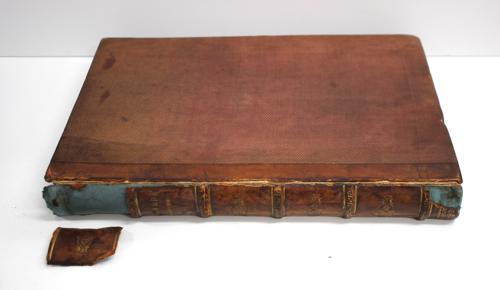
‘Juan Valverde de Amusco’s Anatomia del corpo humano con molte figure [Anatomy of the Human Body with Many Figures] (1560)’
Juan Valverde de Amusco’s Anatomia del corpo humano con molte figure [Anatomy of the Human Body with Many Figures] (1560) is one of the most influential anatomical works of the Renaissance.
This donation by Dr Walford will support essential conservation work to repair and stabilise this 16th-century volume, ensuring that its pages and delicate engravings are preserved for future study and exhibition.
Diana has helped to protect one of the RCP’s most important early anatomical texts, a masterpiece that illuminates the evolution of medical understanding over centuries.
Conservation of Dr Una Christina Ledingham portrait:
Dr Una Christina Ledingham (1900–1965) was a pioneering physician whose career combined clinical excellence, teaching and leadership. She qualified at the London School of Medicine for Women in 1923 and went on to become a consultant at the Hampstead General and Marie Curie Hospitals. A specialist in diabetes, she became a leading authority on pregnancy in diabetic women; helping to reduce maternal and infant mortality and shaping medical practice for generations.
Displayed alongside her peers, this portrait celebrates her achievements, highlight the vital role of 20th-century women physicians and inspire today’s medical community.
Catherine's donation will support the conservation work required to ensure Dr Ledingham’s legacy is recognised and preserved within the RCP.
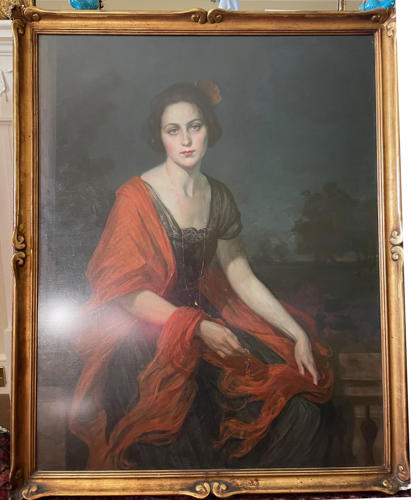
Conservation of Dr Una Christina Ledingham portrait:
Dr Una Christina Ledingham (1900–1965) was a pioneering physician whose career combined clinical excellence, teaching and leadership. She qualified at the London School of Medicine for Women in 1923 and went on to become a consultant at the Hampstead General and Marie Curie Hospitals. A specialist in diabetes, she became a leading authority on pregnancy in diabetic women; helping to reduce maternal and infant mortality and shaping medical practice for generations.
Displayed alongside her peers, this portrait celebrates her achievements, highlight the vital role of 20th-century women physicians and inspire today’s medical community.
Clare's donation will support the conservation work required to ensure Dr Ledingham’s legacy is recognised and preserved within the RCP.
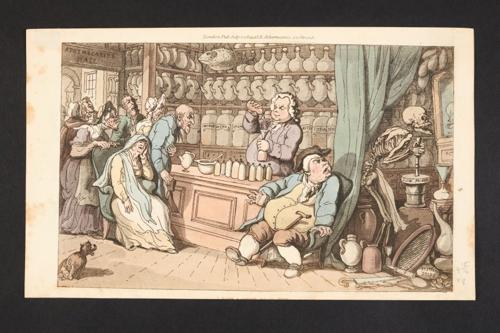
The Quack Doctor print:
This hand-coloured satirical etching and aquatint, The Quack Doctor, was created by the celebrated caricaturist Thomas Rowlandson and published by Rudolph Ackermann in 1814. While mocking the early 19th century’s questionable medical practices , the print also offers a fascinating glimpse into the interior of a crowded apothecary’s shop; complete with drug jars, mortars and bottles labelled arsenic, opium and vitriol. Behind a curtain, a skeleton assistant mixes a preparation, ominously labelled Slow Poison.
Diana's donation will conserve this fragile, rare, satirical print to enable it to be displayed and studied by future RCP visitors, illuminating the history of pharmacy and the public scepticism that once shaped medical attitudes.
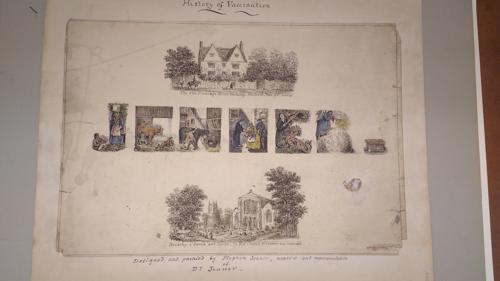
History of Vaccination print:
This rare print (c.1825–1850) was designed and painted by Stephen Jenner, the nephew of Dr Edward Jenner – the pioneering physician whose discovery of vaccination transformed the prevention of smallpox worldwide. The work is taken from an original figurative watercolour, reflecting the artistic skill within the Jenner family and offering a unique visual connection to one of the most significant figures in medical history.
As both an artwork and a historical document, the print captures the intertwining of science, medicine and culture in the early 19th century.
Jane’s donation will conserve this print to help preserve a fragile link to Jenner’s legacy, ensuring that this evocative piece can be displayed, studied and appreciated by future generations.
Discovery of Pulmonary Circulation print:
This research illustration features extracts and a drawing of Michael Servetus, also known as Miguel Serveto, (1509–1553) grouped above two columns of text, possibly from an old display panel about Servetus and his work. Servetus was a Spanish theologian, humanist and the first European to correctly describe the function of pulmonary circulation. The print also includes what appears to be a manuscript signature of Sir William Osler (1849–1919) in the bottom right corner. Osler was a Canadian physician who played a key role in transforming the organisation and curriculum of medical education, emphasising the importance of clinical experience.
Anita’s donation will conserve this print, preserving a rare link between two great figures in medical history, ensuring their important stories of medical discovery continue to inspire future generations.

Leprosy cases treated by Dr Bhau Dajee; collection of drawings and prints – £250 (set A)
This remarkable group of watercolour drawings and prints record the pioneering work of Dr Bhau Dajee (1822–1874), an Indian physician said to have developed a late 19th century treatment for leprosy. The 1868–69 images document patients treated by Dr Dajee at the Grant Medical College in Bombay (now Mumbai). The collection was presented to the RCP by the Secretary of State for India, as evidence of the treatment’s apparent success. Though Dr Dajee’s precise method remained secret, contemporaries believed it to involve chaulmoogra oil; later used in the first scientifically recognised leprosy treatments. These works form an important record of early cross-cultural medical exchange and colonial-era research into infectious disease.
Dr Chamber's support enables careful cleaning, paper repair and preservation of this unique visual record of early medical innovation, allowing future generations to explore a rare intersection of Indian and European medical history within the RCP’s collections.
Adopting this treasure helps fund the repair and conservation of these fragile watercolour drawings.

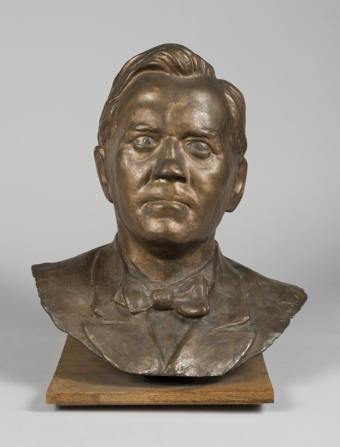
Conservation of bronze bust of Sir Alexander Fleming-
Sir Alexander Fleming (1881–1955) was elected an RCP member in 1944, following his groundbreaking discoveries of penicillin and lysozyme – which transformed modern medicine. In 1956, the RCP acquired a bronze bust of Fleming by the artist Frank Kovacs, to commemorate his extraordinary contribution to science and human health.
Today, the bust requires specialist conservation and a new base to once again be displayed prominently within the RCP’s Regent’s Park building.
Adopting this bust helps preserve a lasting tribute to Fleming’s legacy, restoring an important artwork within the collection and connecting the RCP’s visitors to one of medical history’s greatest figures.
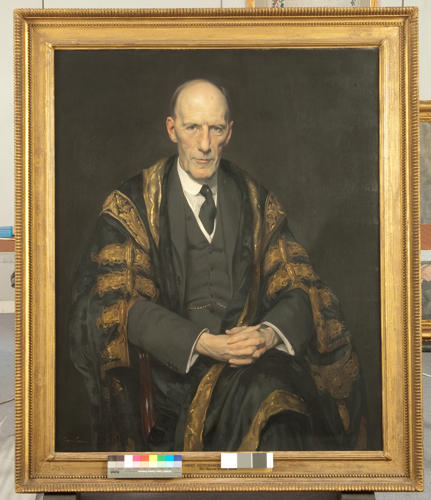
Sir Robert Hutchison portrait-
This 1938 portrait depicts Sir Robert Hutchison (1871–1960), a distinguished physician, teacher and medical author who made significant contributions to paediatrics and internal medicine. Hutchison was a RCP fellow and president from 1933 to 1935, who was knighted for his services to medicine.
Painted by celebrated Scottish artist, James Gunn, the portrait captures Hutchison’s quiet authority and intellect, reflecting both the sitter’s stature and the artist’s mastery of portraiture. Executed in oil on canvas, the painting remains a powerful testament to one of the RCP’s most respected 20th-century figures.
By adopting this treasure, The Tay Charitable Trust has helped fund essential conservation work, including glazing the painting to protect it from dust, light and environmental damage. Their support will safeguard this important portrait, ensuring that the legacy of Hutchison, and the artistry of Gunn, continuing to inspire RCP visitors.
Conservation of Dr Una Christina Ledingham portrait:
Dr Una Christina Ledingham (1900–1965) was a pioneering physician whose career combined clinical excellence, teaching and leadership. She qualified at the London School of Medicine for Women in 1923 and went on to become a consultant at the Hampstead General and Marie Curie Hospitals. A specialist in diabetes, she became a leading authority on pregnancy in diabetic women; helping to reduce maternal and infant mortality and shaping medical practice for generations.
During World War II, Dr Ledingham ran her husband’s practice while continuing her own demanding hospital work. She later served as an examiner for the RCP and University of London, and a governor of the Royal Free Hospital. Known as a brilliant but exacting teacher, she inspired respect among her students and compassion among her patients.
Displayed alongside her peers, this portrait will celebrate her achievements, highlight the vital role of 20th-century women physicians and inspire today’s medical community. Sarah's donation will support the conservation work required to ensure Dr Ledingham’s legacy is recognised and preserved within the RCP.
Conservation of Dr Una Christina Ledingham portrait:
Dr Una Christina Ledingham (1900–1965) was a pioneering physician whose career combined clinical excellence, teaching and leadership. She qualified at the London School of Medicine for Women in 1923 and went on to become a consultant at the Hampstead General and Marie Curie Hospitals. A specialist in diabetes, she became a leading authority on pregnancy in diabetic women; helping to reduce maternal and infant mortality and shaping medical practice for generations.
During World War II, Dr Ledingham ran her husband’s practice while continuing her own demanding hospital work. She later served as an examiner for the RCP and University of London, and a governor of the Royal Free Hospital. Known as a brilliant but exacting teacher, she inspired respect among her students and compassion among her patients.
Displayed alongside her peers, this portrait will celebrate her achievements, highlight the vital role of 20th-century women physicians and inspire today’s medical community. Dr Joanna Ledingham's donation will support the conservation work required to ensure Dr Ledingham’s legacy is recognised and preserved within the RCP.
Explore the collection
This remarkable group of watercolour drawings and prints record the pioneering work of Dr Bhau Dajee (1822–1874), an Indian physician said to have developed a late 19th century treatment for leprosy. The 1868–69 images document patients treated by Dr Dajee at the Grant Medical College in Bombay (now Mumbai). The collection was presented to the RCP by the Secretary of State for India, as evidence of the treatment’s apparent success. Though Dr Dajee’s precise method remained secret, contemporaries believed it to involve chaulmoogra oil; later used in the first scientifically recognised leprosy treatments. These works form an important record of early cross-cultural medical exchange and colonial-era research into infectious disease.
Your support will enable careful cleaning, paper repair and preservation of this unique visual record of early medical innovation, allowing future generations to explore a rare intersection of Indian and European medical history within the RCP’s collections.
Adopt this treasure to help fund the repair and conservation of these fragile watercolour drawings.
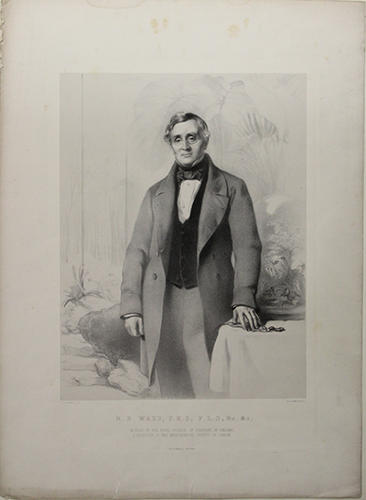
This chine-collé portrait depicts Nathaniel Bagshaw Ward (1791–1868), the English doctor and botanist best known for inventing the Wardian case – an innovation that revolutionised the global transport of plants and transformed botanical science, trade and horticulture. A fellow of the Royal Society and treasurer of the Microscopical Society of London, Ward bridged medicine, botany and early environmental science creativity.
The print shows signs of age, including surface dirt, tears and staining, and requires careful cleaning and repair. By adopting this treasure, you will help preserve a portrait of a pioneering physician–botanist whose work changed scientific history and enabled the spread of plant species across continents. Your support will ensure Ward’s legacy continues to inspire future generations.
Thomas Turner was a pioneering English surgeon, educator and reformer who played a defining role in shaping medical training in the north of England. In 1824, he founded the Royal School of Medicine and Surgery in Manchester, the city’s first medical school and a precursor of today’s University of Manchester’s School of Medical School. His commitment to accessible, high-quality medical education helped transform professional standards and expand opportunities for generations of physicians.
This chine-collé print has suffered significant wear, including tears, losses and discolouration. Conservation will stabilise the fragile sheet, repair damage and ensure it can once again be safely displayed.
Adopting this portrait will help preserve the legacy of a major figure in the history of British medical education and the development of regional training for future doctors.

This is a hand-coloured lithograph of Charles White (1728–1813), an influential English physician and co-founder of the Manchester Royal Infirmary. White was a pioneering surgeon and obstetrician whose innovations helped advance maternal care in the 18th century. A complex figure, he is also remembered for the unusual case of Hannah Beswick; he mummified her remains at her request, due to her fear of premature burial – and later displayed her in his museum of anatomical specimens.
The portrait itself shows surface dirt, edge losses and light discolouration. Conservation will stabilise the paper, clean the image and restore its structure so it can be safely displayed as part of the RCP’s medical heritage collection.
Adopting this treasure will help preserve a rare likeness of a bold and influential – if at times controversial – early medical innovator, ensuring his story remains accessible to future generations.
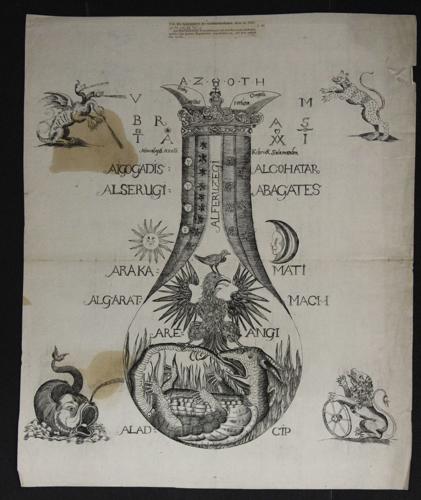
This detailed engraving, Die Geheimnisse der Goldmacherkunst [The secrets of the alchemist’s art], offers a fascinating glimpse into early modern alchemical practice. Likely produced in the 18th or early 19th century, the print reflects the mystery and the scientific curiosity surrounding the pursuit of transmutation – the transformation of base metals into gold. Rich in allegorical and technical imagery, it reveals how art and emerging science were related in the centuries before modern chemistry took shape.
By adopting this treasure, you will support the professional repair and conservation of the engraving; including surface cleaning, stain reduction and the careful mending of tears and folds. Contribute to help restore this rare visual record of alchemical history, ensuring that its intricate detail remains accessible to scholars, students and visitors.
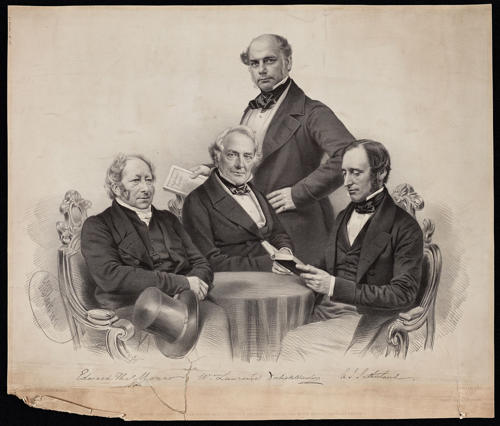
This rare mezzotint portrait from before 1851 brings together four influential 19th-century physicians. Produced from original daguerreotypes, it features Edward Thomas Monro (a leading authority on mental health), Sir William Lawrence (a distinguished surgeon and medical writer), Forbes B Winslow (a pioneering psychiatrist) and Alexander John Sutherland (an expert in psychological medicine). The print represents a moment when early photography and medical portraiture intersected to document physicians’ emerging professional identity.
The print survives on delicate chine-collé paper but is in fragile condition, with ingrained dirt and tears extending into the image. Earlier repairs using adhesive tape now threaten the surface – the print needs specialist cleaning, tape removal, and the repair and infilling of losses to preserve the artwork.
By adopting this portrait, you will help safeguard a unique visual record of early British medicine and ensure that it can continue to inspire historians, learners and clinicians for years to come.
This engraved portrait depicts Joseph Hodgson, an influential Quaker surgeon. He was editor of the London Medical Review, surgeon to the Birmingham General Hospital and later president of the Medical and Chirurgical Society of London. He also identified Hodgson’s disease, an aneurysmal condition of the aorta.
Beyond his clinical achievements, Hodgson played a transformative role in expanding medical provision, successfully campaigning for the establishment of Birmingham’s Eye Infirmary to improve access to specialist care.
The print requires conservation to stabilise the fragile paper, reduce staining and repair long-standing damage so it can once again be safely displayed.
By adopting this portrait, you will help preserve the likeness of a pioneering surgeon whose commitment to service, scientific observation and public good continues to resonate across modern cardiovascular and surgical practice.

This striking 19th-century mezzotint depicts James Bentley (1785–1890), engraved by Thomas Lupton after the original painting by John Prescott Knight. Bentley, a prominent London civic figure, is shown in an elegant interior, surrounded by books and papers with St Paul’s Cathedral visible through the window – a testament to his standing in the city’s public life.
The print now shows heavy wear, including edge damage, dirt and tearing. It requires specialist conservation to stabilise the paper, repair losses and lift discolouration.
By adopting this treasure, you will help restore a visually rich portrait that captures Victorian civic identity and London’s cultural landscape, ensuring it can once again be displayed and appreciated.
This engraved portrait, was created by artist S Medley and engraved by N Branwhite in 1801. It depicts members of the Medical Society of London, one of the UK’s oldest surviving medical societies, founded in 1773. The Society united physicians, surgeons and apothecaries to share medical knowledge and consult on complex cases, a pioneering model of professional collaboration.
Published by R & H Causton, this copy carries a remarkable personal connection; an 1843 handwritten note by the obstetrician Dr Samuel Merriman. He records that he knew most of the figures and attests that ‘the likenesses are good’. His inscription in iron gall ink, adds authenticity and historical intimacy to this piece.
Today, the print shows surface dirt, foxing and numerous tears, including a large, repaired corner tear and discolouration from old glassine tape. Conservation treatment will include surface cleaning, stain reduction, tape removal, repair of tears and stabilisation of creases and folds.
By adopting this treasure, you will help fund the full repair of this engraving, ensuring it can once again be safely displayed and studied. Support this a record of one of Britain’s earliest medical societies, capturing the spirit of fellowship that continues to define the RCP.

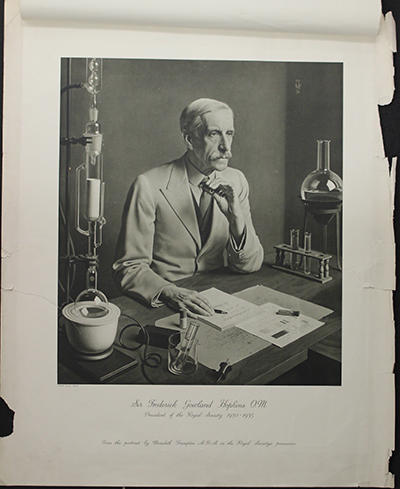
Sir Frederick Gowland Hopkins (1861–1947) was one of the most influential biochemists of the 20th century. Awarded the 1929 Nobel Prize in Physiology or Medicine for the discovery of vitamins, he also identified the amino acid tryptophan and later served as president of the Royal Society.
This historic photograph shows the pioneering scientist whose work transformed global understanding of nutrition and metabolism. The print now shows significant wear, with tears, creasing and discolouration preventing safe display.
By adopting this treasure, you will support essential conservation to stabilise and restore the portrait, ensuring that Hopkins’ extraordinary scientific legacy continues to inspire future generations.
This finely engraved portrait of Robert Smirke (1752–1845) – celebrated painter and Royal Academician – was created by C Picart, after an original by Mary Smirke.
Time has taken a toll; the historic mount has become severely degraded, causing foxing, staining and structural weakness to the print beneath. Conservation will include removing the brittle mount, separating the print from its backing, careful cleaning and stabilisation.
By adopting this portrait, you will help restore an important record of one of Britain’s notable artistic families and preserve a work that reflects the deep historical connections between art, culture and medicine within the RCP collections.
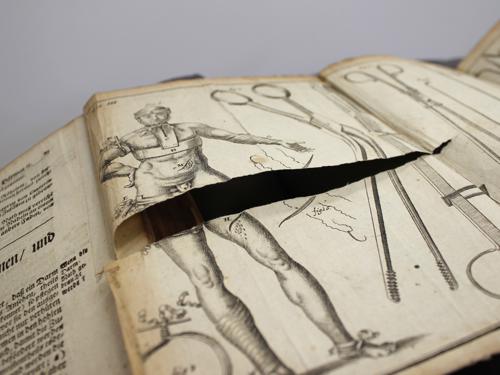
This richly illustrated surgical manual by Lorenz Heister (1683–1758) was one of the most important medical texts of the 18th century. Published in Nuremberg in 1724, this second edition of Chirurgie [Surgery] provides an overview of contemporary surgical practice; from wound care and amputation to the use of innovative instruments. Its nineteen folded copperplate engravings depict surgical tools and procedures, capturing a period of profound medical science transformation. This volume was owned by Harvey Cushing, pioneering neurosurgeon and bibliophile, whose collection became the foundation of Yale’s Medical Historical Library.
Heister’s manual needs some damaged paper and misfolded plates repaired and the whole manual needs cleaning. By adopting this treasure, you will support vital conservation work to repair damaged paper, correct misfolded plates and carefully clean this rare volume.
Contribute to help preserve a milestone in surgical history and a tangible link between two great medical institutions, ensuring that future generations can appreciate this extraordinary artefact.
Published in Venice, this 1547 folio brings together the writings of the great physicians of antiquity; including Aulus Cornelius Celsus, Scribonius Largus, Trotula, Soranus of Ephesus and Pliny the Elder. Medici antiqui omnes, qui latinis literis diversorum morborum genera & remedia persecuti sunt... assembles the foundational texts of Greco-Roman medicine into one comprehensive work for scholars and practitioners. With early manuscript annotations, ownership inscriptions and the distinctive printer’s device , this copy offers a tangible link to centuries of medical learning. It is a remarkable testament to how Renaissance humanists used ancient knowledge in a new age of medical inquiry. It is one of a handful of surviving books to contain an inscription by the RCP’s founding fellow, Thomas Linacre.
By adopting this treasure, you will help fund essential repair and conservation of this 16th-century volume; stabilising its binding, cleaning pages and preserving marginal notes by generations of physicians. Support this cornerstone of Western medicine so it can continue to serve as a physical and intellectual bridge to medical science’s origins.

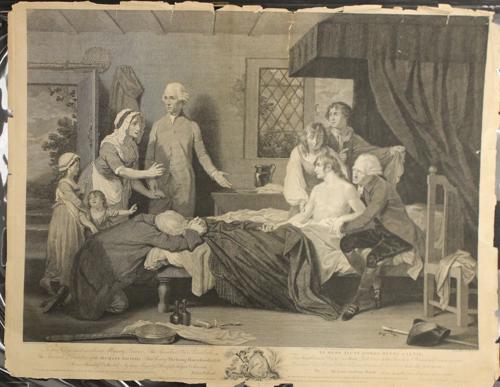
This moving 1787 engraving was created by Robert Pollard, after a painting by Robert Smirke, and published by Pollard in London. Dedicated to the president, vice presidents and directors of the Humane Society (founded 1774), it commemorates the Society’s early lifesaving efforts; reporting that within 13 years, 897 people had been ‘restored to their friends.’
The image depicts a dramatic moment of revival; a young man sits upright in bed, supported by rescuers, as his family look on in awe and gratitude. Around him, domestic details evoke the fragility and triumph of life. The text beneath, both English and French, highlights the Society’s humanitarian mission to rescue those apparently drowned or lifeless; an early precursor to modern resuscitation and emergency medicine.
Printed on soft wove paper, the work has suffered severe damage, with tears and losses along all edges, discolouration and ink stains on the verso. Conservation treatment will include surface cleaning, aqueous washing to reduce staining, tear repair and infilling, and delicate inpainting to restore coherence.
By adopting this treasure, you will help restore one of the most evocative medical and humanitarian prints of the 18th century. Support preserving this early testament to lifesaving and compassion in medicine, a theme that continues to resonate through the RCP’s work today.
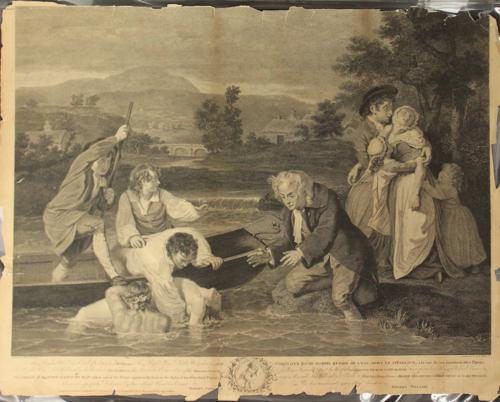
This poignant 1787 engraving was engraved and published by Robert Pollard, after a painting by Robert Smirke. Dedicated to the stewards and directors of the Humane Society, it captures a moment of tragedy and compassion on the River Thames. The scene shows a group of rescuers recovering the body of a young man from the water. Nearby, the boy’s distraught mother faints into her husband’s arms as two small children cling to her skirts. The text in English and French, celebrates the Humane Society, which was founded in 1774 to promote resuscitation when the concept was still novel.
Printed on soft wove paper, the engraving is severely damaged, with large tears, staining, foxing, and the complete loss of its upper border. Conservation treatment will include surface cleaning, aqueous washing to reduce discolouration, repair of tears, infilling of losses and sensitive inpainting to restore the composition.
By adopting this treasure, you will help fund the restoration of this deeply human work, an image capturing the peril and compassion at the heart of 18th-century medical progress. Support this rare engraving so that it can once again be safely appreciated as part of the RCP’s rich history of medicine and humanity.
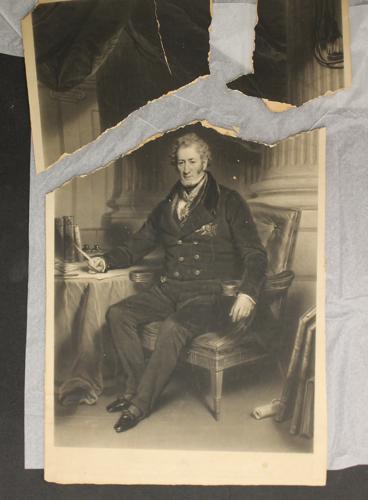
This large-format mezzotint engraving of Sir William Burnett (1779–1861) was engraved by Henry Cousins. It depicts a portrait, by Martin Archer Shee, of one of the most distinguished 19th century naval physicians . Burnett served as Physician General of the Navy from 1832 to 1855 and was physician to King William IV. His career combined medical innovation with exemplary service, overseeing naval personnel’s health across the British Empire, and contributing to naval hygiene and sanitation improvements.
This striking mezzotint has suffered severe physical damage. The print has split into four large pieces, with an additional tear across the figure’s hand and foot. It also shows discolouration, staining and damage from aged backing materials and adhesive tapes.
Conservation treatment will include careful surface cleaning, removal of the backing board, repair of tears and losses, and sensitive inpainting where necessary. By adopting this treasure, you will help fund the professional repair and conservation of this important portrait, rescuing a fragile example of early 19th-century printmaking. Adopt this print to ensure that Sir William Burnett’s image and pioneering legacy can once again be safely displayed within the RCP’s collection.
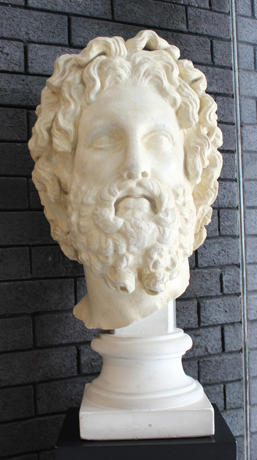
In Greek mythology, Asclepius son of Apollo and Coronis, was revered as the god of medicine and healing. His emblem – the snake-entwined staff known as the rod of Asclepius – remains one of the most enduring worldwide symbols of medicine. The RCP holds a plaster copy of the colossal marble head of Asclepius (5th century BC), the original of which is in the British Museum.
The RCP’s copy suffers from flaking plaster and requires careful conservation to be displayed. Supporting its repair will preserve an iconic symbol of medicine, prevent further degradation and improve its visual appearance.
Support this fragile piece of heritage to protect it while reaffirming the enduring values of care, knowledge and healing that Asclepius represents.
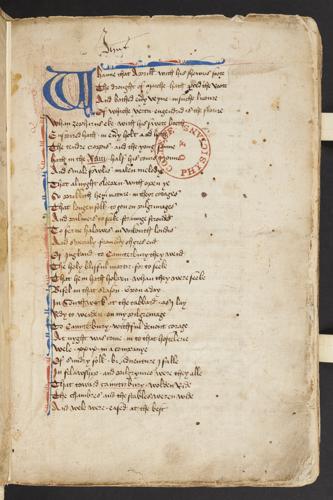
Among the most precious items in the RCP’s collections is a handwritten 15th-century manuscript of Geoffrey Chaucer’s The Canterbury Tales – a rare surviving witness to one of the most influential works in the English literary tradition. Over 6 centuries old, the volume is extremely fragile, and its condition limits physical access for readers, researchers and global audiences.
Digitisation offers a powerful form of preservation. By creating a high-resolution digital facsimile, we protect the original from further handling while opening it up to the world – just as we have successfully done with the Wilton Psalter. Specialist imaging, carried out by experts trained to handle rare manuscripts, will ensure every detail is captured safely and faithfully.
Your support will enable specialist digitisation of the full manuscript and integration into the RCP’s online collections, allowing global access.
Adopting this treasure will safeguard an irreplaceable piece of medieval heritage while allowing students, clinicians, historians and the public to explore Chaucer’s text in extraordinary detail. Your gift helps ensure this remarkable manuscript enters its next chapter – preserved, protected and accessible for generations to come.
Photography by John Chase.
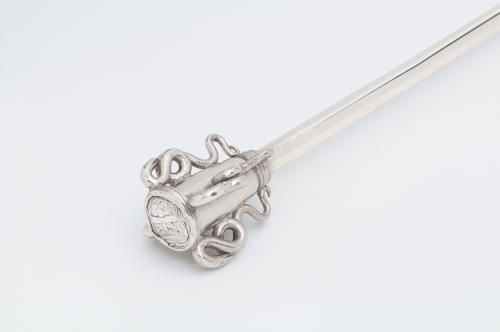
The college caduceus is one of the most important treasures of the RCP; a silver rod capped with four intertwined snakes and inset with the college arms. It has served as the president’s symbol of office since 1556 when it was presented by Dr John Caius, one of the RCP’s early presidents. The caduceus is carried on formal occasions and embodies the enduring authority, continuity and identity of the RCP.
The current display case, funded by fellows in the 1970s, now requires replacement. A new museum-grade case will ensure the caduceus is displayed to modern conservation standards.
Adopt the caduceus to ensure that this rare and highly symbolic treasure can continue to be used and displayed safely, preserving an irreplaceable link to the RCP’s origins and traditions.
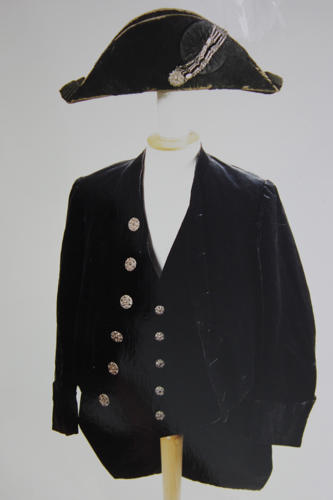
Sir William Withey Gull (1816–1890) was a prominent Victorian physician, RCP fellow and censor (examiner). He was the protégé of Sir William Jenner and built a distinguished career at Guy’s Hospital, London – including assisting in treating the Prince of Wales for typhoid in 1871. As a result, he was made a baronet by Queen Victoria and appointed as a Royal Physician. He named the eponymous Gull’s disease in 1873 and was the first to describe anorexia nervosa in 1874. Based on circumstantial evidence, Gull has been accused of being Jack the Ripper by some 20th-century writers.
The 1872 baronetcy presentation was made by Henry Poole & Co; Saville Row tailors still operating today. Henry Poole & Co have offered to loan a sword and shoes to complete the ensemble, if the costume can be conserved and displayed at the RCP dress.
Support the conservation of this stunning example of court dress to help preserve the legacy of a leading Victorian physician and create a vivid connection to the history of medicine.
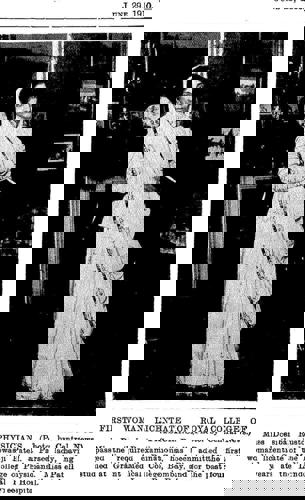
Dr Dossibai J R Dadabhoy (1881–1960) was an Indian obstetrician, gynaecologist, teacher and campaigner. She was the second woman physician formally recognised by the RCP, and the first women recipient of the RCP qualification of licentiate in 1910. She also became the first woman member of the Royal College of Surgeons of England in 1911, and became an RCP member a year later; just 3 years after women were first permitted to sit membership exams. Dr Dadabhoy was the second Indian woman to receive a medical degree from the London School of Tropical Medicine. She was awarded an MBE for her Red Cross work in 1941.
Supporting the commissioning of a portrait of Dr Dadabhoy is a powerful way to celebrate diversity and inclusion at the RCP. Her story highlights the vital contributions of women and migrant doctors; figures still underrepresented on our walls. This portrait will not only preserve history but inspire belonging, representation and change for generations to come.
Fund this commission to help honour Dr Dadabhoy’s achievements, create a more inclusive environment for today’s diverse physician community – and spark conversations about health inequalities that remain pressing today.
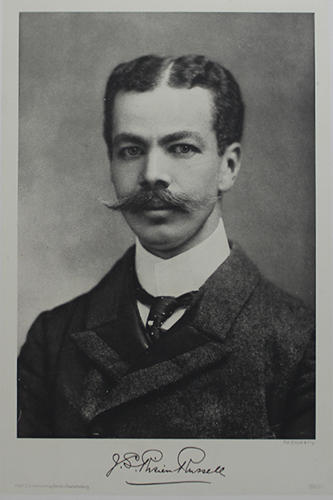
Dr James Samuel Risien Russell (1863–1939) was a pioneering neurologist, professor and one of the first Black British consultants. He was born in British Guiana, educated at Edinburgh University and became an RCP member in 1891, and a fellow in 1897. Over his distinguished career, he contributed vital research on the cerebellum and spinal cord, trained generations of University College London medical students and became consulting physician of neurology at the National Hospital Queen Square. He served as a Captain in the Royal Army Medical Corps during World War I, despite the prejudice against Black doctors.
Commissioning and displaying this new portrait in a prominent location will ensure Dr Russell’s legacy is visibly recognised alongside other leaders of medicine. It will correct historical silences and signal the RCP’s commitment to diversity, inclusion and representation within our collections. Visitor feedback highlights the lack of diversity in our historic portraiture; Dr Russell’s portrait will help foster a stronger sense of belonging for today’s medical community and inspire future generations of physicians.
Adopt this portrait to play a vital role in celebrating a trailblazing figure whose achievements, perseverance and advocacy continue to resonate in medicine and society today.
Contact us
If you have a question about the Adopt a Treasure process or would like to discuss a particular item, please contact Sally Williams, Head of Philanthropy, at sally.williams@rcp.ac.uk who will be delighted to discuss further.
Other donations to support our conservation work
We know not everyone will be able to adopt a complete item, but every contribution plays a vital role in preserving the RCP’s remarkable collections.
Your donation will help conserve fragile books, artworks, instruments, and manuscripts; support the skilled specialists who restore them; and ensure these treasures remain accessible for study and display. Every gift helps protect centuries of medical history and keeps the stories of discovery, care, and innovation alive for future generations.
Please visit our donate page if you would like to contribute towards the RCP’s conservation work.